Welcome to the team
Swimmer 101
What every Mariner should know.
Being a Mariner is about more than swimming fast. It is about learning new skills, working hard, supporting your teammates and becoming a confident, responsible athlete.
This page covers the most important things swimmers should know when joining the Pictou County Mariners.
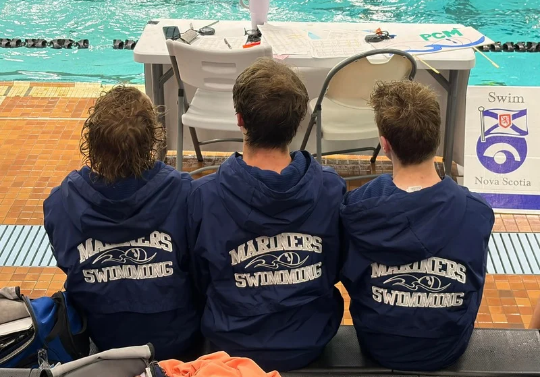
Come ready to learn
Your Role as a Swimmer
Your coaches will plan your training, teach you new skills and help you work toward your goals. Your job is to come ready to learn and give your best effort that day.
Be Ready
- Arrive on time and ready to swim.
- Listen when the coach is speaking.
- Follow instructions and ask questions when you are unsure.
- Try each activity, even when it is challenging.
- Look after your equipment and belongings.
Be a Good Teammate
- Treat coaches, teammates, officials and facility staff respectfully.
- Encourage and support other swimmers.
- Help keep the pool deck and team area tidy.
- Follow team and facility rules.
- Tell a coach if you are hurt, unwell or worried about something.
Your best effort will not look the same every day. What matters is that you are willing to learn and keep trying.
Building independence
Take Ownership of Your Swimming
As swimmers get older and more experienced, they should gradually take more responsibility for their swimming.
- Pack and check your own swim bag.
- Listen for announcements at practice.
- Know which practices, meets and activities are coming up.
- Speak with your coach about races, goals or concerns.
- Be ready when it is time to swim.
- Look after your equipment.
- Ask questions when you need help.
- Learn from both good and difficult practices.
Parents will continue to help with schedules, transportation and PoolQ declarations, but swimmers should become active participants in their own swimming.
Pack before you leave
Come Prepared
Arrive early enough to change and be ready when practice begins.
Check your swim bag before leaving home and clearly label your belongings.
Bring to Every Practice
- Swimsuit
- PCM swim cap
- Goggles
- Filled water bottle
- Towel
- Training equipment requested by your coach
Check your goggles and equipment regularly so they are ready to use. Swimmers should learn to keep track of their own belongings.
Progress through consistency
Make the Most of Practice
Progress comes from regular attendance, focused effort and consistent practice.
Focus on Your Swimming
- Listen carefully to the instructions for each set.
- Pay attention to technique, not only speed.
- Leave enough space between swimmers.
- Follow the lane order set by the coach.
- Complete turns and finishes properly.
Communicate and Support
- Ask the coach if you do not understand something.
- Tell the coach if you need to leave the pool or finish practice early.
- Let the coach know if you are hurt or feel unwell.
- Encourage your teammates without distracting them.
Some practices will feel great, while others may feel difficult. Both are part of becoming a stronger swimmer.
Everyone develops differently
Your Swimmer Pathway
Moving to the next training group is not based on age or one qualifying time alone. Coaches consider the whole swimmer and whether they are ready for the next stage.
Nova Tech to Age Group
Nova Tech swimmers build strong foundations as they progress through Participation, Bronze, Silver and Gold.
Swimmers may then progress into Age Group when their coaches feel they have the skills, maturity and training readiness required.
What Coaches Consider
- Technique
- Training ability
- Attendance and consistency
- Skills and fitness
- Maturity
- Independence
- Overall development
- Readiness for the next level
Every swimmer’s pathway is different. Focus on your own progress rather than comparing yourself with someone else.
Ask questions and speak up
Communicating With Your Coach
Your coach is the best person to ask about your swimming, training and development.
Talk to Your Coach About
- Swimming technique
- Training
- Meet events
- Goals
- Group placement
- Pain, illness or an injury
- Something that happened during a race or practice
- Anything making you uncomfortable or worried
Short questions can often be asked before or after practice. Longer conversations should be arranged for another time so coaches can focus on everyone in the pool.
It is good for swimmers to learn how to ask their own questions. Parents can still help when needed, but speaking directly with your coach is an important part of becoming an independent athlete.
Putting your skills into practice
Swim Meets
Swim meets give you the chance to practise racing, use the skills you have learned and see how you are progressing.
Before the Meet
- Listen when coaches discuss the meet at practice.
- Ask your coach if you are unsure whether you should attend.
- Talk with your coach about your races.
- Make sure your parent declares your attendance in PoolQ.
- Pack everything you will need.
At the Meet
- Arrive before the stated warm-up time.
- Check in with your coach and stay with the team.
- Listen for your events, heats and lanes.
- Speak with your coach before and after each race.
- Cheer for your teammates and keep the team area tidy.
- Ask the coach before leaving the meet.
PCM coaches select each swimmer’s events after discussing them with the swimmer. Parents declare attendance in PoolQ but do not choose the individual races.
Every race is a chance to learn
Understanding Your Results
Race times are one way to measure progress, but they do not tell the whole story.
PB or Personal Best
A PB is your fastest official time in an event. PBs are exciting, but they are not the only sign of progress.
You may also improve by:
- Using better technique
- Completing a stronger start or turn
- Holding your pace
- Trying a longer or more difficult event
- Racing with greater confidence
You will not achieve a PB in every race. Times may stay the same or become slower while your body grows, training changes or new skills are being learned.
DQ or Disqualification
A DQ means a swimming rule was broken and the result cannot count as an official time.
DQs are a normal part of learning competitive swimming. Your coach will explain what happened and help you practise the skill.
Nova Tech swimmers: DQs are not introduced during the earliest stages. They begin at Level 2 as swimmers work toward their Gold level.
A DQ does not mean you failed. It shows you what to work on next.
One race does not define you. Focus on what you learned and what you can work on next.
We are one team
Be a Good Teammate
Swimming includes individual races, but the Mariners are a team.
Your attitude and behaviour affect the people around you. Help make PCM a place where every swimmer feels welcome and supported.
Good Teammates
- Encourage one another.
- Celebrate each other’s progress.
- Include new swimmers.
- Show respect during practices and meets.
- Avoid comparing or criticizing.
- Help keep shared spaces tidy.
- Represent PCM positively at home and away.
- Show good sportsmanship, regardless of the result.
Strong swimmers need recovery too
Look After Yourself
Swimming requires energy, focus and recovery. Looking after your body helps you train safely and get the most from each practice.
Fuel and Hydrate
Eat regularly, arrive properly fuelled and bring a filled water bottle to every practice.
Rest and Recover
Get enough sleep and allow your body time to recover between training sessions.
Speak Up
Tell a coach if you feel unwell, have pain or are feeling overwhelmed or worried.
Pain should not be hidden or ignored. Coaches need accurate information to help keep you safe.
Keep learning and growing
Progress Takes Time
Every swimmer experiences challenges. These moments are a normal part of learning and becoming a stronger athlete.
Talk to your coach, focus on what you can learn and remember that one race or practice does not define you.
All Swimmers Experience
- Difficult practices
- Nervousness before races
- Missed goals
- Plateaus
- Disqualifications
- Changes in motivation
The long-term goal is not simply to create faster swimmers. It is to help young people become confident, resilient and capable while continuing to enjoy the sport.
Proud to be a Mariner
What to Remember
Come prepared. Listen. Ask questions. Work hard. Support your teammates. Learn from mistakes. Take pride in your progress—and enjoy being a Mariner.
You do not need to be perfect. Bring a positive attitude, be willing to learn and give the best effort you can that day.